
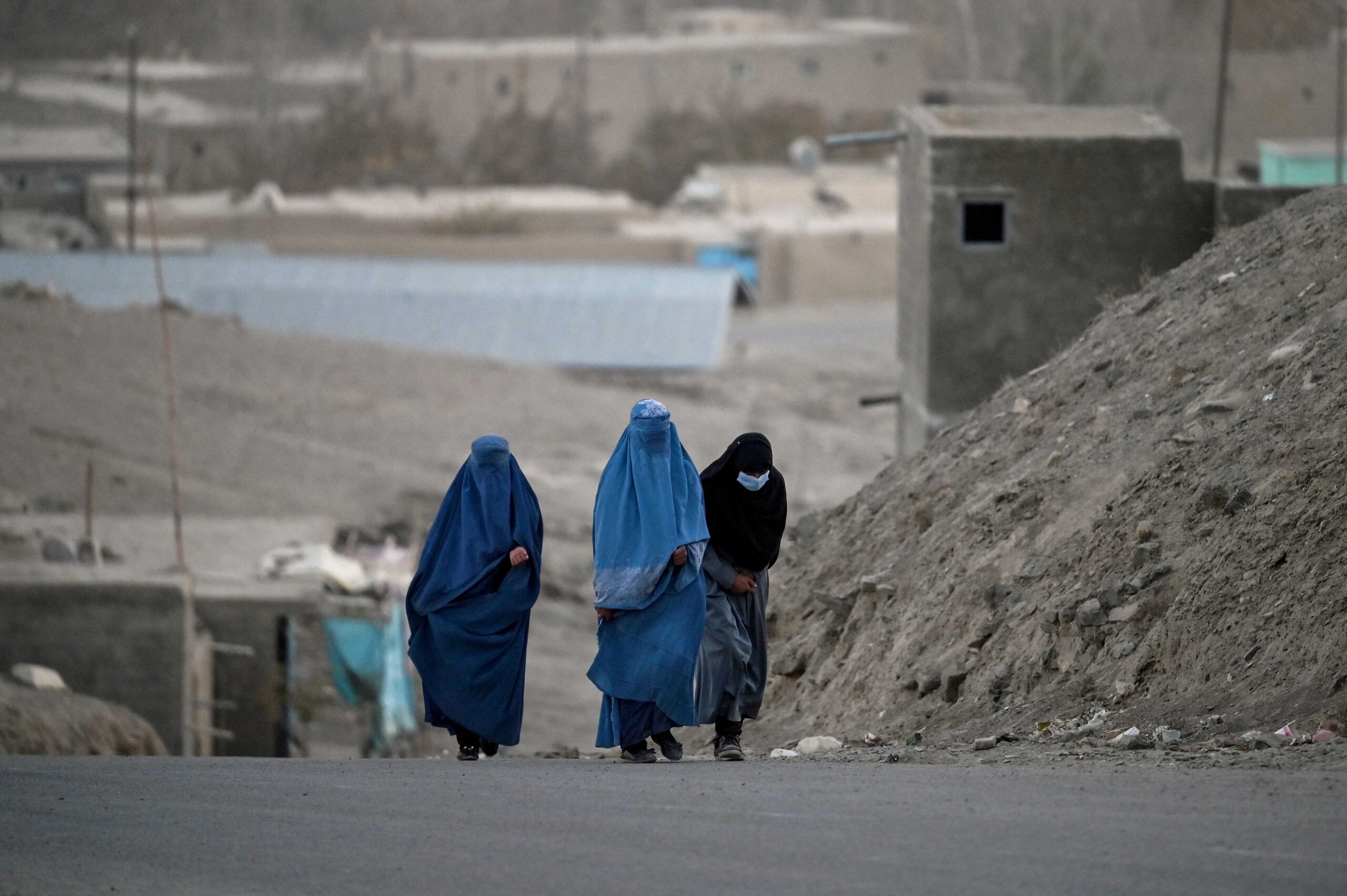
On 15 August 2021, the Taliban entered Kabul and re-established the Islamic Emirate of Afghanistan after nearly two decades of insurgency against the Afghan government and its international allies. Five years later, the Taliban remain in control of the country. The fifth anniversary provides an opportunity not only to assess what the Taliban’s rule has meant for Afghanistan in general, but also to examine its consequences for one of Afghanistan’s historically marginalized communities: the Hazaras.
Hazaras are an ethnic group whose members are predominantly Shi’a Muslims, with a sizable number of Sunni Hazaras as well. Most speak Hazaragi, and significant Hazara populations live in the central highlands as well as in Kabul, Herat and Mazar-e Sharif. Estimates of their proportion vary considerably because Afghanistan has never conducted a reliable modern national census; the Hazaras are generally regarded as one of Afghanistan’s largest ethnic groups. Their history has been marked by discrimination, forced displacement, land confiscation, political marginalization, and episodes of mass violance akin to genocide.
The Hazara experience under the Taliban is complicated. On the one hand, the Taliban’s return brought a substantial reduction in the conventional warfare that had devastated Afghanistan for decades. On the other hand, the Hazaras have continued to face sectarian terrorism, political marginalization, land disputes, forced displacement and restrictions on education and public life. Although some of the most deadly attacks have been carried out by the Islamic State-Khorasan Province (ISKP), rather than by the Taliban itself, there are credible investigations that have documented abuses against Hazaras by Taliban forces and also failure to protect the vulnerable people.
A History of Marginalization
The vulnerability of the Hazara population long predates the Taliban’s return to power. Hazaras have experienced discrimination, forced displacement, mass killings and political marginalization under successive Afghan governments. Their predominantly Shi’a religious identity has added a sectarian dimension to their historical persecution.
The first Taliban government, which controlled most of Afghanistan between 1996 and 2001, was particularly brutal toward Hazaras. Taliban forces committed massacres against Hazara civilians, including in Mazar-e Sharif in 1998 and Yakaolang in 2001. The EUAA describes the Hazara community as having historically experienced severe abuses, including mass killings and systematic discrimination, and notes that the Taliban carried out massacres during their first period of rule.[1]
After the Taliban were removed from power in 2001, Hazaras experienced significant political and social advancement. The 2004 Afghan Constitution formally recognized equality among citizens, and Hazaras gained representation in parliament, some government institutions, universities, the media and civil society. Expanded access to education was particularly important. A generation of Hazara students entered universities and professional occupations that had previously been largely inaccessible to them.
Yet the post-2001 period was also marked by renewed sectarian violence. From the middle of the 2010s onward, ISKP increasingly targeted Shi’a Muslims, particularly Hazaras, through attacks on mosques, schools, cultural centers, demonstrations and public transportation. Thus, when the Taliban returned in 2021, Hazaras carried with them both the historical memory of Taliban persecution in the 1990’s and the trauma of years of sectarian terrorism.[2]
The Taliban’s Return and Documented Abuses
The first months following the Taliban takeover provided an early indication of the dangers facing Hazaras. Amnesty International investigated the killing of 13 Hazaras in Daykundi Province on 30 August 2021. According to eyewitness testimony collected by Amnesty, nine former members of the Afghan security forces were executed after surrendering to Taliban fighters. Two civilians were also killed, including a 17-year-old girl. Amnesty concluded that the killings appeared to constitute war crimes.[3]
A year later, Amnesty documented another serious incident in Ghor Province. On 26 June 2022, Taliban fighters conducted a night raid on a Hazara family home. Six members of the family were killed, including a woman and a 12-year-old girl. Four men were reportedly detained and summarily executed, and the body of at least one of the men showed signs of torture. Amnesty described the killings as part of a wider pattern of targeted violence against Hazaras and people associated with the former Afghan government.[4]
These cases are significant because they demonstrate that the Hazara experience cannot be explained exclusively through ISKP terrorism. There is credible evidence of abuses directly attributed to Taliban forces and affiliated actors.
At the same time, it would be misleading to attribute all post-2021 violence against Hazaras to the Taliban. ISKP is a separate organization and has deliberately targeted Shi’a Muslims, particularly Hazaras. The distinction between the two actors is essential when assessing responsibility for violence.
ISKP and Sectarian Terrorism
The continuing threat posed by ISKP is one of the central features of Hazara life under Taliban rule. The group considers Shi’a Muslims to be legitimate targets and has repeatedly attacked Hazara neighborhoods, religious institutions, schools and public transportation.[5]
Dasht-e Barchi, a predominantly Hazara neighborhood in western Kabul, has been particularly affected. In November 2023, an explosion on a minibus in the area killed seven members of the Hazara community and injured others. Human Rights Watch has documented a continuing series of attacks against Hazaras and other religious minorities since the Taliban takeover.[6]
In April 2024, an ISKP gunman attacked worshippers at a Shi’a mosque in Guzara district in Herat Province, killing six people, including a child. In September of the same year, ISKP claimed responsibility for killing 14 Hazara men in Daikundi Province.[7]
The attacks have also targeted education. The September 2022 bombing of the Kaaj Educational Center in Dasht-e Barchi killed and injured scores of students, many of them young Hazara women. The attack became one of the most powerful symbols of the danger confronting Hazara students.
The EUAA has observed that ISKP’s deadliest attacks have frequently been directed at the Hazara community. It also notes, however, that the Taliban has conducted military operations against ISKP and that the number of some types of ISKP attacks declined during parts of 2023.[8]
The problem, therefore, is not simply the existence of ISKP. It is also the inability—or unwillingness—of the Taliban authorities to provide adequate protection to communities that remain vulnerable. Human Rights Watch has concluded that Taliban authorities have not taken sufficient measures to protect Hazaras and other at-risk communities or to provide adequate assistance to survivors.[9]
Political Exclusion
One of the most profound changes since 2021 has been the loss of the political system through which Hazaras had gained representation during the previous two decades.
The Taliban dismantled the constitutional political order and re-established the Islamic Emirate. Hazaras have retained only very limited representation within the new governing structure. Minority Rights Group reported in 2025 that Hazaras faced “total political exclusion” under the de facto authorities and had lost virtually all influential government positions.[10]
The EUAA similarly reports that although a limited number of Hazaras were appointed to government positions after the Taliban takeover, their representation at central and provincial levels remained very restricted.[11]
Political exclusion has practical consequences. Government institutions control land administration, education, employment, public services and security. When an ethnic and religious minority has little meaningful representation in those institutions, it has fewer opportunities to challenge discriminatory decisions.
This represents a significant reversal of the political gains made after 2001. Under the former constitutional system, Hazaras participated in elections and had representatives in parliament and government. Under Taliban rule, those mechanisms have effectively disappeared.
Land, Displacement and Economic Pressure
Land has become another major source of anxiety for Hazara communities. Since the Taliban takeover, human rights organizations have documented cases of forced eviction, land confiscation and displacement affecting Hazaras.
Amnesty International reported in 2022 that non-Pashtun communities, particularly Hazaras, Turkmen and Uzbeks, had faced forced evictions from homes and farms in several provinces. The organization reported that such evictions were sometimes connected to efforts to redistribute land to Taliban supporters.[12]
More recently, Minority Rights Group reported continuing forced displacement and seizure of ancestral land in Hazara-populated districts. Its 2025 statement highlighted Khas Uruzgan, where it reported killings of Hazaras by Taliban-backed groups and the subsequent confiscation of homes and land belonging to displaced families.[15]
The EUAA has likewise reported a pattern of forced evictions and land grabbing since August 2021, including cases apparently linked to ethnicity or political affiliation.[14]
Land is particularly important in Hazara society because it represents not only economic survival but also historical belonging. Losing ancestral land can force families into cities or neighboring countries, contributing to a long history of Hazara displacement.
These pressures have been intensified by Afghanistan’s wider economic crisis. The collapse of the former government, reductions in international assistance, unemployment, drought and restrictions affecting the banking system have produced severe economic hardship throughout the country. Hazaras are not uniquely affected by Afghanistan’s economic crisis, but discrimination and political marginalization can make the consequences particularly severe for vulnerable communities.
Education and the Hazara Future
Education is perhaps the area in which the Taliban’s policies have the most profound implications for the future of Hazaras.
During the two decades after 2001, education became an important avenue of Hazara advancement. Hazara students, including large numbers of women, entered universities and professional occupations. Education offered a means of overcoming some of the social and economic barriers that had historically confined the community to the margins of Afghan public life.
The Taliban’s restrictions on female education have therefore been especially damaging. Girls are prohibited from attending secondary school beyond the sixth grade, while women have also been excluded from universities. Five years after the Taliban takeover, UNESCO estimated that approximately 2.4 million Afghan girls remained excluded from secondary education.[15]
For Hazara women, the consequences of these restrictions can be compounded by ethnic and religious discrimination. A Hazara girl may face restrictions because she is female while simultaneously belonging to a community that has historically experienced religious and ethnic marginalization.
The loss of educational opportunity is consequently not simply a question of individual rights. It threatens the social development of an entire generation. The educational achievements of Hazaras after 2001 helped produce teachers, doctors, journalists, lawyers, academics, entrepreneurs, and civil servants. Restricting access to education threatens to reverse those gains.
Hazara Women and Multiple Forms of Discrimination
The experience of Hazara women illustrates how different forms of discrimination can overlap.
Afghan women generally face severe restrictions under Taliban rule. For Hazara women, however, gender restrictions intersect with ethnic and religious marginalization. The result can be a particularly severe narrowing of their participation in public life.
Minority Rights Group reported in 2025 concerns about gender-based violence against Hazara women and girls, including reports of sexual violence, forced disappearance and arbitrary detention.[16] Such observations demonstrate the broader concern that Hazara women can face multiple layers of vulnerability.
Before 2021, Hazara women had become increasingly visible in education, journalism, civil society and professional life. The Taliban’s restrictions have removed many of the institutions through which they were able to exercise their rights.
A Community Caught Between Two Threats
The Hazara experience under Taliban rule is therefore shaped by two distinct but interconnected threats.
The first is discrimination and abuse by Taliban authorities and affiliated actors. Credible investigations have documented unlawful killings, torture, forced displacement and political exclusion.
The second is terrorism by ISKP. The organization has deliberately targeted Shi’a Hazaras through bombings, shootings and attacks on schools, mosques, sports facilities and public transportation.
This distinction matters. Blaming every attack on the Taliban would obscure the independent role of ISKP. But focusing exclusively on ISKP would also overlook the Taliban’s responsibility as Afghanistan’s de facto government to protect civilians and ensure equal treatment before the authorities.
The EUAA’s assessment is useful in this respect: it notes both the Taliban’s failure to provide sufficient protection against ISKP attacks and the existence of abuses and discrimination affecting Hazaras under Taliban rule.[17]
Five Years On: Security Without Inclusion?
Five years after the Taliban’s return, Afghanistan presents a complicated picture.
There is little question that the level of conventional warfare has fallen substantially. Taliban authorities have consolidated territorial control, and many Afghans experience the streets as safer than they were during the years of intense insurgency and international military operations. Taliban officials have consequently presented security as one of their principal achievements.[18]
But security cannot be measured only by the absence of conventional warfare.
For a Hazara civilian, meaningful security also means being able to worship without fear of a suicide bombing, travel safely on public transportation, retain one’s home and farmland, participate in public life, receive an education and obtain protection from government authorities regardless of ethnicity or religion.
By that broader definition, the picture is much less positive.
The Taliban has maintained order more effectively than the previous government did in many parts of Afghanistan, but it has not created an inclusive political system. Hazaras remain politically marginalized, while ISKP continues to pose a serious threat to the community. Human rights organizations continue to document forced displacement, discrimination and abuses by Taliban forces or affiliated groups.[19]
Conclusion
Five years of Taliban rule have transformed Afghanistan. The country is no longer experiencing the same level of conventional warfare that characterized much of the previous two decades. Yet the reduction of battlefield violence has not produced an inclusive political order or guaranteed equal security for all Afghans.
For the Hazara population, the Taliban’s return has meant the erosion of many of the political and educational gains achieved after 2001. Hazaras have faced political exclusion, land disputes, forced displacement and abuses by Taliban forces and affiliated actors. At the same time, ISKP has continued its campaign of sectarian terrorism against Hazara Shi’a communities.
The central lesson is that physical security and human security are not the same thing. A country may become more stable in a conventional military sense while minorities remain vulnerable to discrimination, displacement and targeted violence.
The future of the Hazara community will depend partly on whether Afghanistan’s rulers recognize that genuine stability requires more than military control. It requires equal citizenship, protection of religious minorities, fair access to land and public services, meaningful political representation and the right of every Afghan child—including Hazara girls—to receive an education.
For Hazaras, these are not abstract political demands. They are questions of survival, dignity and belonging.
Five years after the Taliban returned to Kabul, the fundamental question remains whether Afghanistan can become a country in which being Hazara and Shi’a is no longer a reason for exclusion or danger. The current trend shows that the answer to both points is negative.
Akram Gizabi
Image surce:
https://www.hrw.org/news/2022/01/18/afghanistan-taliban-deprive-women-livelihoods-identity
Notes
- EUAA, Country Focus: Afghanistan, 4.8.4. Hazaras and other Shia groups, February 2026. EUAA, “Hazaras and other Shia groups”
- EUAA, Country Guidance: Afghanistan, 3.14.2. Individuals of Hazara ethnicity and other Shias, May 2024. EUAA, “Individuals of Hazara ethnicity and other Shias”
- Amnesty International, “Afghanistan: 13 Hazara killed by Taliban fighters in Daykundi province – new investigation,” 5 October 2021. Amnesty International report
- Amnesty International, “Afghanistan: Taliban torture and execute Hazaras in targeted attack – new investigation,” 15 September 2022. Amnesty International report
- EUAA, Country Guidance: Afghanistan, 3.14.2. EUAA Hazara and Shia assessment
- Human Rights Watch, “Attacks Target Afghanistan’s Hazaras: Inadequate Protection Provided for Community Long at Risk,” 3 May 2024. Human Rights Watch report
- Human Rights Watch, “Afghanistan’s Hazara Community Needs Protection,” 13 September 2024. Human Rights Watch report
- EUAA, Country Guidance: Afghanistan, 2.2. Islamic State Khorasan Province (ISKP). EUAA assessment of ISKP
- Human Rights Watch, “Attacks Target Afghanistan’s Hazaras,” 3 May 2024. Human Rights Watch report
- Minority Rights Group International, “MRG alarmed by ongoing and systematic persecution of Hazaras,” 19 June 2025. Minority Rights Group report
- EUAA, Country Guidance: Afghanistan, 3.14.2. EUAA Hazara and Shia assessment
- Amnesty International, “Afghanistan: One year of the Taliban’s broken promises, draconian restrictions and violence,” August 2022. Amnesty International report
- Minority Rights Group International, “MRG alarmed by ongoing and systematic persecution of Hazaras,” 19 June 2025. Minority Rights Group report
- EUAA, Country Guidance: Afghanistan, 3.14.1. Overview. EUAA overview of ethnic and religious minorities
- UNESCO, reporting on Afghanistan’s education crisis, August 2026. The figure of approximately 2.4 million girls excluded from secondary education was reported by UNESCO in connection with the fifth anniversary of the Taliban takeover. See also Associated Press, “While Taliban leaders mark 5 years in power in Afghanistan, a UN official warns of a rights crisis,” 15 August 2026. Associated Press report on the UNESCO figure
- Minority Rights Group International, “MRG alarmed by ongoing and systematic persecution of Hazaras,” 19 June 2025. Minority Rights Group report
- EUAA, Country Guidance: Afghanistan, 3.14.2. EUAA Hazara and Shia assessment
- Associated Press, “Afghanistan marks 5 years under the Taliban with safer streets but pleas for jobs and education,” 14 August 2026. Associated Press report
- Human Rights Watch, World Report 2025: Afghanistan. Human Rights Watch, “World Report 2025: Afghanistan”