
March 8, 2026
Introduction
Every year on March 8, the world observes International Women’s Day, a global moment dedicated to celebrating women’s achievements and advancing the struggle for gender equality. What began as a movement for labor rights and suffrage more than a century ago has evolved into a worldwide platform for addressing persistent injustices faced by women. While many countries mark progress in political participation, education, and economic opportunity, the day also reminds the world that millions of women continue to live under severe discrimination.
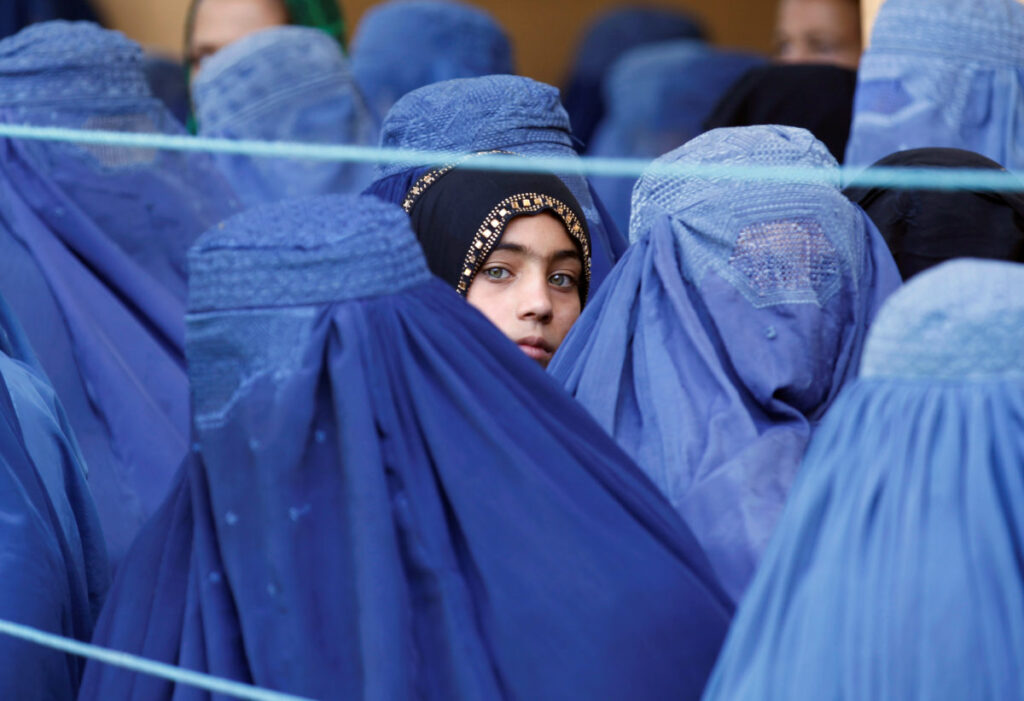
Few situations illustrate this reality more starkly than the condition of women and girls in Afghanistan since the return of the Taliban to power in 2021. Over the past several years, a sweeping system of restrictions has excluded women from education, employment, public life, and even basic social participation. International organizations, activists, and scholars increasingly describe this situation as “gender apartheid”—a system of institutionalized discrimination designed to remove women from society.
International Women’s Day therefore carries special significance when reflecting on Afghanistan. The day is not merely about celebrating progress; it is also about acknowledging places where women’s rights have dramatically regressed and deteriorated. Afghan women today represent one of the most urgent human rights crises in the world.
The Origins and Meaning of International Women’s Day
International Women’s Day emerged from the early twentieth-century labor and feminist movements in Europe and North America. The first National Woman’s Day was observed in the United States in 1909, inspired by campaigns for better working conditions and the right to vote. In 1910, German activist Clara Zetkin proposed establishing an international day dedicated to women’s rights at the International Socialist Congress. The idea gained immediate support, and the first celebration took place in 1911 across several European countries.
The day soon became associated with broader political change. In 1917, women in Saint Petersburg organized demonstrations demanding “bread and peace” during World War I. Their strike helped spark the Russian Revolution of 1917, which ultimately led to the adoption of March 8 as the official date of International Women’s Day.
Today the observance is recognized worldwide and officially supported by the United Nations. It highlights women’s achievements while calling attention to ongoing inequalities in areas such as employment, political participation, health care, and education.
Despite decades of activism and progress, global gender equality remains far from achieved. Women worldwide possess only about 64 percent of the legal rights enjoyed by men, demonstrating the persistence of systemic discrimination even in relatively progressive societies.
Global Progress—and Persistent Challenges
Over the past century, the global landscape of women’s rights has changed dramatically. Women have gained suffrage in nearly every country, educational opportunities have expanded, and female participation in politics and the workforce has steadily increased. Women now serve as presidents, prime ministers, judges, scientists, and business leaders.
However, progress has not been evenly distributed. Gender-based violence remains widespread, women are underrepresented in leadership positions, and economic disparities persist across regions. In some countries, women’s rights have stagnated or even regressed.
International Women’s Day therefore functions both as a celebration and a call to action. Its campaigns often emphasize three interconnected goals:
- Advancing women’s and girls’ rights
- Removing systemic barriers to equality
- Empowering the next generation of women leaders
The observance encourages governments, organizations, and individuals to recognize that gender equality is not simply a moral imperative but also a social and economic necessity. Societies that empower women tend to achieve stronger economic growth, healthier communities, and more stable political systems.
Yet nowhere does the struggle for equality appear more urgent than in Afghanistan.
Afghanistan Before 2021: Fragile Progress
Before the Taliban’s return to power in August 2021, Afghanistan had experienced two decades of gradual—though uneven—progress in women’s rights following the fall of the previous Taliban regime in 2001.
Millions of girls returned to school. Women entered universities, the media, civil society organizations, and even government institutions. Some served as members of parliament, ministers, and judges. Urban areas such as Kabul saw increasing numbers of women working in professional sectors including medicine, education, and journalism.
These gains were fragile and unevenly distributed, especially between urban and rural regions. Afghanistan still ranked among the lowest countries in the world for gender equality. Yet the progress achieved between 2001 and 2021 represented a significant transformation compared with the country’s earlier Taliban era.
For many Afghan women, those two decades offered the first opportunity to pursue education, careers, and political participation. That progress was abruptly reversed in 2021.
The Taliban’s Return and the Reversal of Women’s Rights
When the Taliban regained control of Afghanistan in August 2021, they initially promised a more moderate approach than during their previous rule in the 1990s. These assurances quickly proved misleading.
Within months, the Taliban began issuing a series of decrees restricting the rights of women and girls. By 2025, more than 70 separate directives had been introduced limiting women’s freedoms and opportunities.
The cumulative effect of these policies has been the systematic exclusion of women from nearly every aspect of public life.
Education: A Generation Denied Learning
Perhaps the most widely condemned Taliban policy is the ban on girls’ education beyond the sixth grade. Afghanistan is currently the only country in the world where girls are barred from attending secondary school.
The consequences are enormous. More than 1.5 million girls have been prevented from continuing their education since the Taliban returned to power.
In addition to closing secondary schools for girls, the Taliban have also prohibited women from attending universities. The ban has effectively halted higher education for Afghan women, erasing two decades of progress in academic participation.
Humanitarian organizations warn that this policy could produce devastating long-term effects. By 2030, millions of Afghan girls may miss out on secondary education entirely, undermining the country’s economic development and social stability. Education is not only a pathway to personal advancement; it is also essential for the development of healthcare systems, governance, and economic growth. By denying education to half the population, Afghanistan risks losing an entire generation of professionals and leaders.
Work and Economic Exclusion
The Taliban have also imposed sweeping restrictions on women’s employment. Women have been barred from most government jobs, many NGO roles, and numerous private-sector occupations.
Female participation in the workforce has dropped dramatically. In recent years, only about 24 percent of women remain economically active, compared with nearly 89 percent of men.
One symbolic example of this exclusion was the closure of thousands of beauty salons in 2023. These salons had provided employment for tens of thousands of women and represented one of the few spaces where women could gather socially. Their closure eliminated critical sources of income for many families.
Economic marginalization also deepens Afghanistan’s humanitarian crisis. Many households previously relied on women’s income to survive. By removing women from the workforce, the Taliban have increased poverty across the country.
Restrictions on Public Life and Personal Freedom
Beyond education and employment, Afghan women face severe limitations on mobility and public participation.
Policies imposed by the Taliban include:
- Strict dress codes requiring full body coverings
- Restrictions on travel without a male guardian
- Bans on women speaking publicly in some contexts
- Exclusion from most political and government roles
Today no women hold positions in Afghanistan’s national or local governing structures, and their presence in media and public institutions has almost completely disappeared.
The cumulative effect is the near erasure of women from public life.
Why Experts Call It “Gender Apartheid”
Many activists and scholars now describe Afghanistan’s system as gender apartheid, drawing parallels with systems of racial segregation such as those once enforced in South Africa.
Gender apartheid refers to institutionalized policies designed to segregate and systematically discriminate against individuals based on gender.
In Afghanistan, this includes:
- Legal prohibitions on girls’ education
- Exclusion of women from most employment
- Restrictions on movement and public participation
- Elimination of women from political representation
Together these measures form a comprehensive structure of gender-based segregation.
International human rights organizations argue that such policies violate fundamental rights guaranteed by international law, including the right to education, freedom of movement, and equal participation in public life.
Humanitarian Consequences
The impact of these policies extends far beyond gender equality. They contribute directly to Afghanistan’s broader humanitarian crisis.
The country faces widespread poverty, food insecurity, and collapsing public services. Restrictions on women exacerbate these challenges in several ways.
For example, the education ban prevents women from training as doctors, nurses, and midwives. This creates severe shortages in healthcare services, particularly for women and children. Experts warn that the lack of female healthcare workers could lead to rising maternal and infant mortality rates.
Humanitarian agencies also struggle to deliver aid because Taliban rules often prevent women from working with NGOs. In a country where women frequently interact only with female aid workers, these restrictions hinder the delivery of essential services.
Afghan Women’s Resistance
Despite severe repression, Afghan women continue to resist.
Some women organize underground schools to educate girls in secret. Others run informal support networks, online learning programs, or clandestine businesses. Activists have organized protests demanding the restoration of their rights, even though such demonstrations carry significant personal risk.
Many Afghan women have also turned to digital platforms and international advocacy to raise awareness of their situation. Their voices have become a powerful reminder that Afghan women are not passive victims but active agents fighting for their freedom.
The Role of the International Community
The international response to the crisis has included diplomatic pressure, humanitarian aid, and advocacy campaigns. The United Nations and numerous human rights organizations have repeatedly urged the Taliban to reverse their restrictions on women and girls.
However, the international community faces difficult challenges. Governments must balance humanitarian assistance for the Afghan population with efforts to avoid legitimizing the Taliban’s policies.
Some countries have considered recognizing gender apartheid as a crime under international law. Others have imposed sanctions or restrictions aimed at pressuring the Taliban to change course.
While these measures have drawn global attention to the issue, meaningful progress remains elusive.
Why International Women’s Day Matters for Afghanistan
International Women’s Day provides a powerful platform for highlighting the plight of Afghan women. The observance reminds the global community that women’s rights are universal human rights, not privileges granted by governments.
For Afghan women, the day symbolizes solidarity and international attention. It sends a message that their struggle has not been forgotten.
More broadly, the situation in Afghanistan underscores the importance of protecting women’s rights everywhere. Progress achieved over decades can be rapidly reversed if political systems change or extremist ideologies gain power.International Women’s Day therefore serves as both a celebration of achievements and a warning against complacency.
Conclusion
More than a century after its creation, International Women’s Day remains a vital moment for reflecting on the status of women worldwide. While remarkable progress has been made in many regions, the crisis in Afghanistan demonstrates how fragile those gains can be.
Since the Taliban’s return to power in 2021, Afghan women have experienced one of the most dramatic reversals of rights in modern history. Bans on education, employment, and public participation have effectively erased women from much of Afghan society. Many observers now describe the system as gender apartheid—a stark reminder that the struggle for equality is far from over.
Yet the courage and resilience of Afghan women continue to inspire global solidarity. Their determination to pursue education, maintain community networks, and advocate for their rights reflects the enduring spirit of the women’s rights movement.
International Women’s Day calls on the world not only to celebrate progress but also to confront injustice wherever it exists. The future of Afghan women—and the principle of universal human rights—depends on sustained international attention, advocacy, and action.
Only when women everywhere enjoy equal rights, opportunities, and dignity will the true promise of International Women’s Day be fulfilled.
Image source: https://www.pbs.org/